
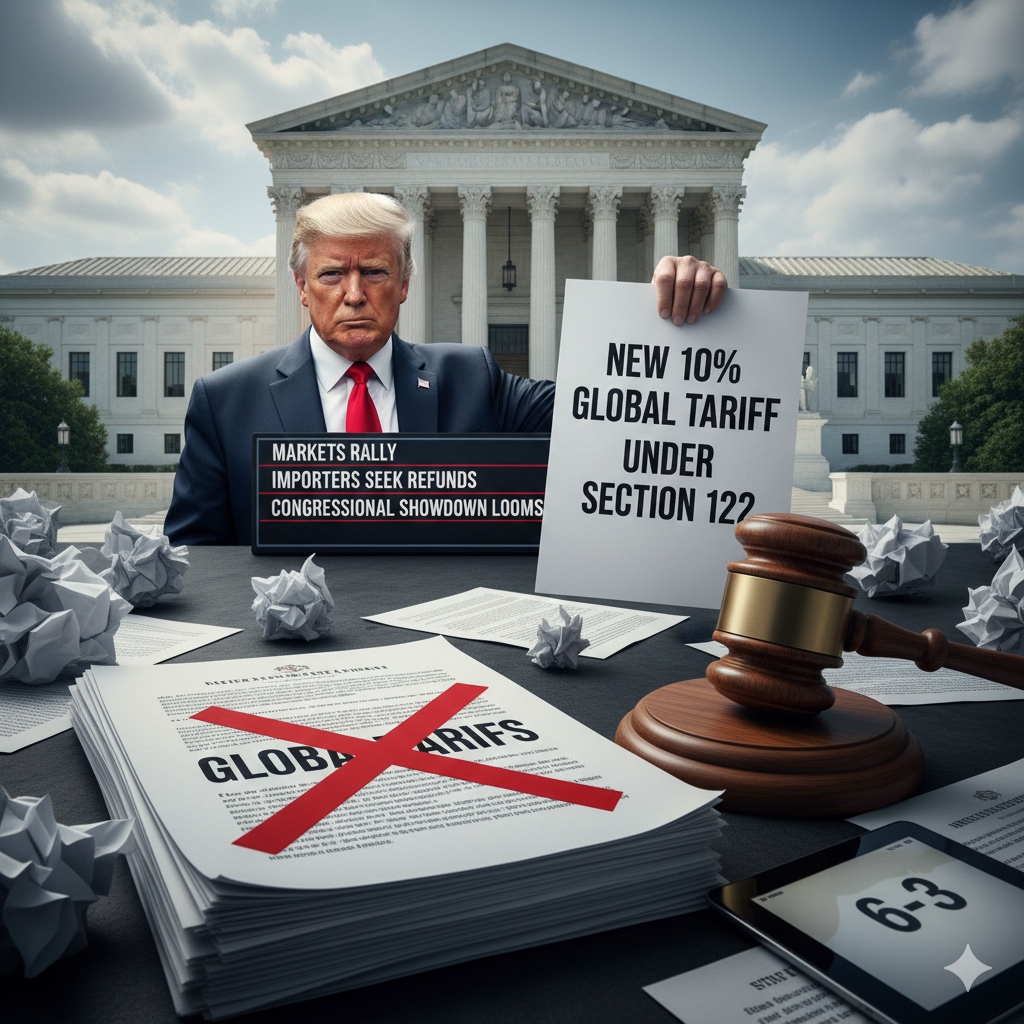
The Landmark Supreme Court Ruling
On a significant day for U.S. economic policy, the Supreme Court delivered a 6-3 ruling that invalidated President Trump’s global tariff agenda. This ruling marks a crucial turning point in the interpretation of executive power, particularly as it pertains to international trade and tariffs. The court’s opinion, articulated by Chief Justice John Roberts, underscored the limitations placed upon the executive branch by the International Emergency Economic Powers Act (IEEPA). Chief Justice Roberts emphasized that the IEEPA was not intended to grant unfettered authority to the executive, particularly in imposing sweeping tariffs without Congressional oversight.
The Chief Justice argued that the ruling aimed to reaffirm the balance of power among the branches of government, particularly in economic matters that have far-reaching impacts on both the domestic and global economy. The court found that the tariffs, which applied to a wide range of goods, were enacted based on an overreach of presidential authority that contravened the established legal framework.
In light of this landmark decision, immediate implications can be observed concerning the tariffs imposed on various goods. The ruling facilitates the potential reduction of tariff percentages that had previously been instituted, impacting industries ranging from agriculture to technology. Tariffs were generating significant revenue—an estimated $100 billion since 2025, according to available financial data—affirming their economic weight. However, with the judicial invalidation of these tariffs, stakeholders will need to reassess their business strategies and the overall market landscape.
This important ruling illustrates the dynamic interplay between law and policy, raising important questions about the future direction of U.S. trade relations and the limits of executive authority in tariff implementation.
Market Reactions and Economic Impacts
The Supreme Court’s recent decision to strike down former President Trump’s global tariff agenda has led to immediate and noticeable reactions across various market sectors. Analysts observed a significant increase in stock prices as investors felt the ruling alleviated fears surrounding the ongoing trade war, which had previously contributed to market volatility. The S&P 500 index, among other major indices, showed a marked uptick, reflecting growing investor confidence and the hope for a more stable trade environment.
For various manufacturing sectors and retailers, the court’s ruling provided much-needed relief. Businesses had been struggling with the unpredictability brought on by tariffs, which often added inflationary pressures and complicated supply chain dynamics. The restoration of trade predictability is expected to encourage companies to invest and expand operations, potentially leading to an increase in job creation. Manufacturers that rely heavily on imports can now breathe easier, as tariffs that once threatened their profit margins have been dismantled.
Reactions from political leaders and international stakeholders have also been significant. For instance, leaders in China and Canada have responded positively, expressing a willingness to engage in dialogue for improved trade relations. The European Union has likewise welcomed the ruling, indicating that it could pave the way for reducing trade barriers and enhancing economic cooperation. However, there are concerns among certain factions about the long-term implications of the decision on domestic industries and the global trading system. Overall, the Supreme Court’s ruling appears to have fostered an environment of optimism, reflecting a shift away from escalating trade tensions and toward a more cooperative global economic framework.
The recent ruling by the Supreme Court has introduced significant turbulence in the political landscape, particularly impacting President Trump’s administration and its strategy concerning international trade. Following the court’s decision to strike down his global tariff agenda, President Trump expressed his dissatisfaction while hastily announcing plans for a new universal tariff policy. This move reflects his administration’s attempt to respond to the ruling and underscores the contentious relationship between the executive branch and legislative authority.
The implications of this ruling stretch beyond immediate political reactions; they raise critical questions regarding the balance of power in the context of international trade agreements. Historically, Congress has retained significant power over tariff imposition and foreign trade, suggesting that this ruling could galvanize further discussions on limiting executive authority in trade matters. Indeed, many Democrats have seized upon this moment as an opportunity to advocate for more stringent checks on the executive branch, arguing that trade policy decisions should be subjected to greater legislative oversight.
Moreover, the intertwining of tariffs with Trump’s reelection strategy poses additional layers of complexity. The President has often used tariffs as a cornerstone of his economic policy, linking them to measures aimed at revitalizing American manufacturing and job growth. However, the Supreme Court’s ruling presents a notable hurdle in this strategy, as the administration grapples with recalibrating its approach going forward, especially in an election year. As domestic and international constituents react to the ruling, the political stakes surrounding tariffs are elevated, reflecting broader concerns about economic stability and trade relations.
In light of these developments, it will be crucial to monitor responses from both sides of the aisle as they assess their positions on trade and executive power in the upcoming months. The ripple effects of this Supreme Court decision will undoubtedly shape the discourse surrounding international trade and foreign policy, impacting both legislation and the political ambitions of soon-to-be election contenders.
Conclusion: A Turning Point in Trade Policy
The recent ruling by the Supreme Court to strike down former President Trump’s global tariff agenda marks a significant pivot in U.S. trade policy, with potential ramifications that could reshape international trade dynamics for years to come. This decision underscores the necessity for Congressional oversight in trade agreements and tariff implementations, emphasizing that unilateral action may no longer hold the same sway it once did. By reaffirming the pivotal role of the legislative branch, the court has revitalized the discussion surrounding the proper channels through which trade policy should be negotiated.
Historically, tariffs have been employed as a tool for protecting domestic industries; however, this ruling suggests a shift towards a more collaborative approach that involves Congressional input. The balance of power in trade decisions is likely to be recalibrated, as lawmakers may take a more active role in shaping policies to address concerns of stakeholders, including consumers and businesses alike. This collaborative approach may not only foster greater accountability but also contribute to a more stable trade environment.
Looking ahead, the implications of this ruling are profound, as it could set a precedent for how future administrations engage in trade negotiations and implement tariff strategies. The Supreme Court’s ruling may encourage a more collaborative framework, compelling both current and future leaders to seek bipartisan support and public buy-in for trade policies. As international trade relations evolve, the necessity for a coherent strategy that reflects a consensus among lawmakers may become increasingly apparent. Ultimately, this pivotal moment could herald a new era of trade policy that prioritizes collaboration and accountability, significantly altering the landscape of U.S. economic relations on a global scale.
Thanks again and I hope to see everyone