
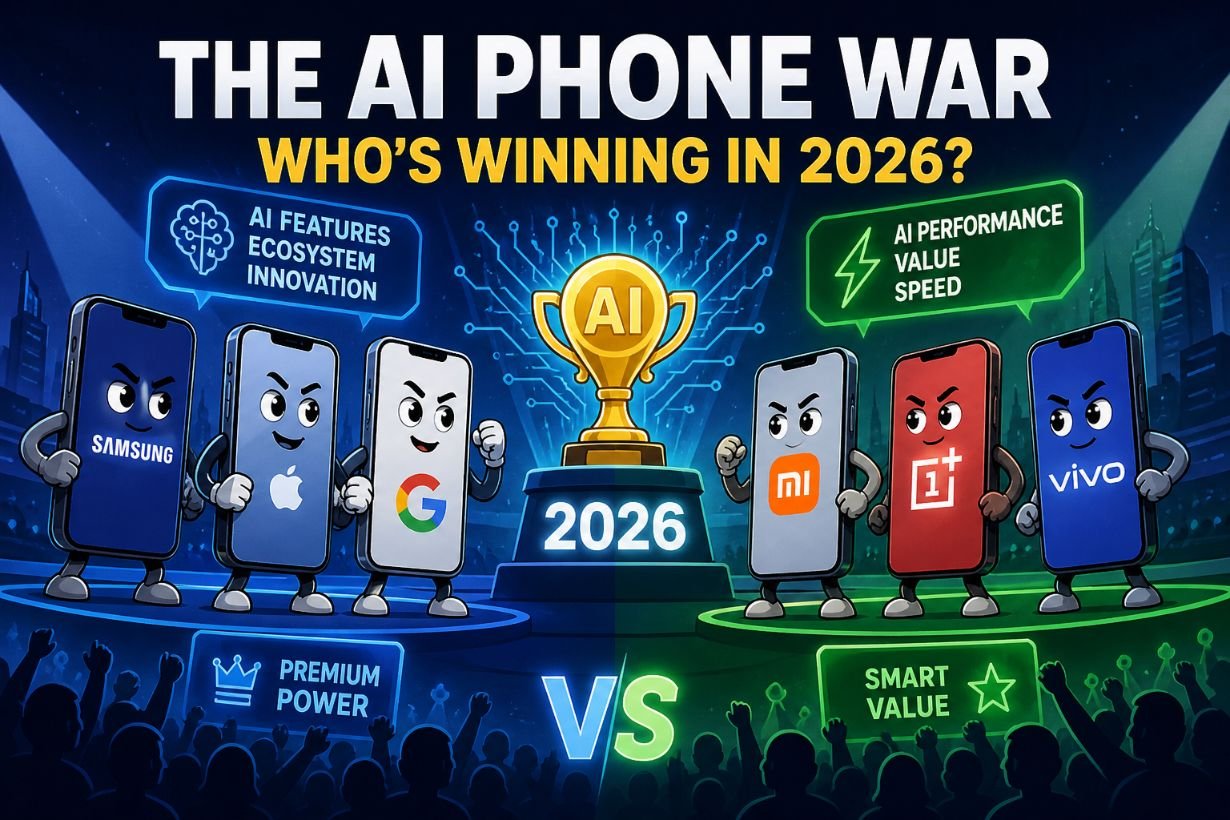
Smartphones are now no longer just tools – they’re becoming intellectual systems that actively shape how users interact with technology . In 2026 , the competition between leading tech companies recently had a major shift –from batteries and cameras life to artificial intelligence . What was once a supporting feature has now become the core of smartphone innovation , forcing global – tech giants into a high – stakes competition to create the most advanced AI powered smartphone experience .
The Rise of AI-First Smartphones
This change is vividly visible in how significant technology companies are redesigning their flagship smartphones , Models like – Iphone 15, Samsung Galaxy S24, and Google Pixel 8 shows this transition . Instead of just focusing on traditional upgrades like improved cameras or faster processors, brands are now prioritizing more on AI-driven experiences that impact on everyday use .Tools like live translation , Automatic photo editing , smart text suggestions , and battery optimization are becoming more common . The aim is no longer just to improve overall performance but to make smartphones more useful in everyday tasks .
Apple: Strength in Integration
Apple has taken a more dominant and seamless approach to artificial intelligence compared to its competitors. Instead of just introducing highly visible or experimental AI tools , the brand focuses on integrating intellectual perception quietly into the overall user experience . This means features like enhanced photo organization, predictive text, voice assistance, and system optimization work in the background without feeling obtrusive to the user .
The aim is to make the device feel naturally smart rather than overtly powered by AI . While this approach enhances performance and ensures a smooth experience , it also means Apple tends to introduce less flashy AI features as compared to other companies which prioritize rapid innovation.
Samsung: AI You Can See and Use
Unlike Apple’s subtle hidden approach, Samsung’s smartphones positions AI as a direct part of how users interact with their phones on a daily basis than ever before. Samsung actively showcases AI as a core part of its users, the brand focuses on real-time usability, especially communication and media tools. The emphasis is less on what AI is and more on what it allows users to do instantly. Whether it is simplifying complicated tasks , guiding during conversations, or elaborating content creation workflows , Samsung’s AI design focuses on reducing effort in daily usage. This approach makes the device feel highly interactive and fast-paced,especially for the users who prefer direct, hand-on screen functionality.
However, despite all its wide range of tools , not every feature becomes a part of daily use but still can be useful . Some remain situational, used only when particular needs arise . Even so, Samsung continues to push forward with experimentation-driven strategy, positioning itself as one of the most fast-paced innovators in the AI smartphone space.
Google: AI That Predicts Before
Google does not treat artificial intelligence as a simple set of features added to smartphones. Rather than focusing on adding isolated tools, the company builds its device around the idea of prediction–where the phone gradually learns how a user behaves and starts responding before the user even gives a command. In this system, the device becomes more than just a smartphone . It starts functioning like an adaptive companion that studies patterns of interaction over time , allowing it to deliver suggestions, responses, and optimizations that feel increasingly personalized.
With time, this leads to a more flexible experience where the phone feels increasingly personalized and responsive to individual needs.This becomes clear in Pixel smartphones operating in daily use. Instead of treating AI as something users actively switch on or interact with , it works quietly in background similar to Apple but yet something unique . A key strength of this strategy lies in its deep integration with Google’s broader ecosystem, particularly search and data-driven services. Because the company has access to one of the largest information ecosystems in the world , its smartphones are able to deliver more context-aware suggestions and smarter automation.
Even so , despite all its advanced AI capabilities, Google still struggles with market penetration when compared to more dominant hardware manufacturers, which limits how widely its innovations are experienced.
So, Who Is Winning the AI Phone War in 2026 ?
The AI phone war in 2026 does not produce a single definitive winner, but instead highlights the emergence of three distinct technological philosophies shaping the future of smartphones. Apple focuses on delivering intelligence through seamless integration, where AI quietly enhances performance without drawing attention to itself. Samsung’s approach highlights accessibility and hands-on interaction, ensuring that AI feels practical and immediately useful . In contrast, Google builds its ecosystem around predictive intelligence, where the device gradually learns user behavior and adapts proactively .However, the most crucial realization is that this competition is not about superiority in a traditional sense . Instead, it reflects a diversification of intelligence itself – where different companies are shaping different versions of what “smart” truly means. As these systems continue to develop, the distinction between device and user experience will become increasingly blurred .
Ultimately, the future of smartphones will not be defined by which company wins the AI race, but by how effectively artificial intelligence becomes embedded into daily life without losing transparency, trust, and human control.
Do you have more detailed price information